
Land Banking Explained: A Patient Path to Powerful Returns
I had an in-depth conversation with Brad Warren on my Pending and Trending Podcast and here’s what I learned.
Land banking isn’t flashy. It’s not a get-rich-quick play. And that’s exactly why seasoned investors are paying attention. Brad is a land banking consultant, educator, and self-described “seller of dirt”. We unpacked what land banking really is, how it works and why patience is the secret ingredient behind some truly impressive returns.
What Is Land Banking—Really?
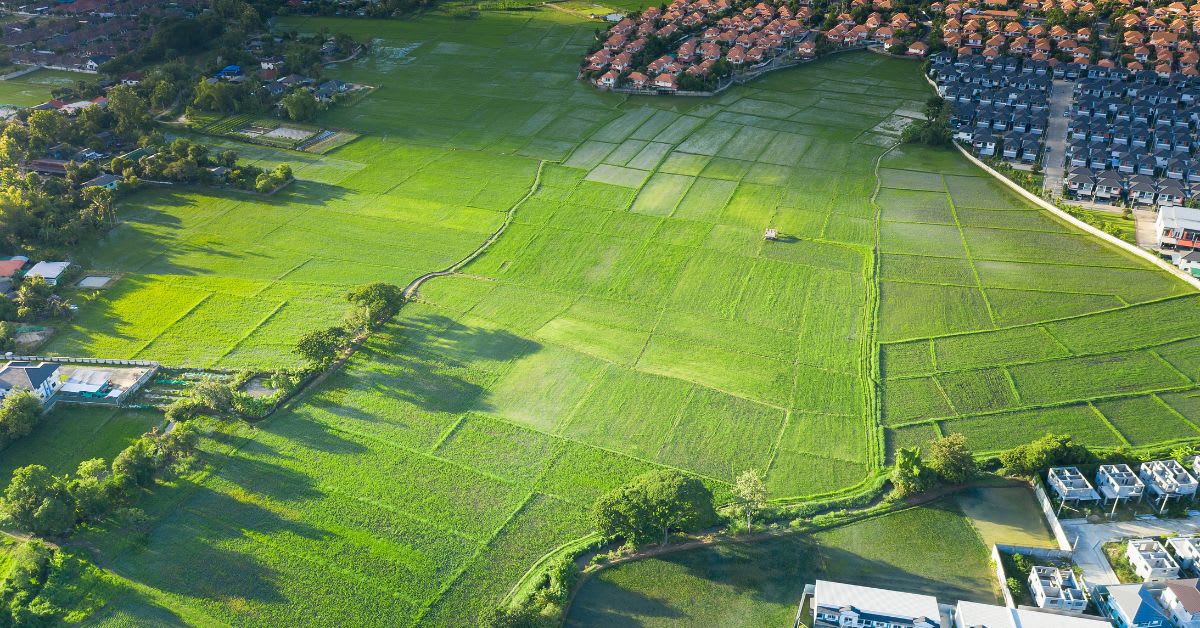
At its simplest, land banking is the purchase of pre-developed raw land—land with nothing built on it—strategically located in the path of future growth.
The strategy is straightforward:
-
Buy the land
-
Hold it patiently (per Brad - typically 7–10 years)
-
Sell it to a developer who needs that specific parcel to complete a larger project
When that moment arrives, the landowner is often in the driver’s seat. According to Brad, that’s why investors commonly see returns in the 3× to 7× range.
“This isn’t speculation for us,” Brad explains. “It’s disciplined, long-term investing. You’re waiting until development has no choice but to come to you.”
Brad’s Personal ‘Aha’ Moment
Brad’s journey into land banking started with a deeply personal realization.
After decades of quarterly net-worth tracking, he discovered something surprising: while his wife could comfortably retire on her 401(k), he could not—on his own.
That realization led him to his first land purchase in 2012. One property became two. Two became three. And eventually, his once-skeptical wife joined him—literally writing checks at a hotel presentation she swore she wouldn’t buy into.
Today, they own 12 land parcels, most held inside self-directed Roth IRAs, positioning them for potentially tax-free gains down the road.
Types of Land Investors Can Own
Land banking isn’t one-size-fits-all. Brad broke down the five primary land categories, each tied to different investment levels and development demand:
-
Agricultural (Non-Residential)
Often used for solar farms, a rapidly growing sector—especially in California. -
Residential
Future housing developments as population expands outward. -
Industrial (Light & Heavy)
Warehouses, manufacturing, and logistics hubs. -
Commercial
Apartments, offices, and mixed commercial uses. -
Mixed-Use
The most complex and expensive—combining residential, retail, parking, and more.
Per Brad, your budget and goals typically determine which category fits best.
When—and How—Do You Sell?
This is where land banking flips traditional real estate thinking on its head.
There’s no “For Sale” sign. No MLS listing. No active marketing.
Instead, investors wait.
When a developer needs your land, they come knocking. At that point, Brad and his team provide free negotiation coaching, helping investors understand timing, pricing, and leverage—often guiding them toward that coveted 3×–7× return window.
“We call it lazy-person investing,” Brad joked. “You do nothing… until it’s time to do everything.”
How Much Does It Take to Get Started?
-
Minimum investment: ~$25,000
-
Upper range: Up to $2 million+
Investors can:
-
Purchase land already held in company inventory (quick close)
-
Or be matched with land sourced specifically for their budget and zoning preference
The investor always owns the land outright—fee simple ownership—and makes the final decision on when to sell.
Funding Options (Beyond Cash)
While cash is simplest, Brad outlined several alternatives:
-
Self-Directed IRAs (Traditional or Roth) – commonly used, especially for tax efficiency
-
1031 Exchanges – ideal for investors exiting rentals who want zero management
-
Financing / HELOCs – generally discouraged due to interest eating into returns
As always, Brad stresses: consult a CPA or financial advisor before choosing a structure.
Why California? Why Now?
Two major forces are accelerating land demand:
1. Renewable Energy Mandates
California requires 100% renewable energy by 2045, fueling massive demand for solar farms and battery energy storage systems (BESS).
2. Warehouse Moratoriums Near Cities
Urban areas are pushing warehouses outward—toward regions like Lancaster and Palmdale, where Brad’s investors already own land.
The result? Developers are actively seeking parcels that meet strict location and zoning needs.
Risk: What Could Go Wrong?
According to Brad, the biggest risk isn’t losing money—it’s impatience.
Selling too early is like opening a fine bottle of wine before it’s ready. You might get your money back… but you miss the magic.
With nearly five decades in business, Brad notes that he’s not aware of any investor who lost money—provided they followed the long-term plan.
A Hidden Opportunity: The 2% Referral Program
One of the most surprising parts of the conversation? The finder program.
Qualified individuals can earn 2% of the gross purchase price for referring investors—on every purchase, not just the first.
Brad himself has earned over $55,000 in referral fees, some still coming in more than a decade later.
“One podcast appearance led to 21 property sales,” Brad shared. “That finder made over $45,000.”
Education and screening are required—but for the right connector, it’s a powerful ancillary income stream.
How the Land Is Selected (The 16-Point Test)
Brad’s team uses a 16-point comprehensive analysis checklist. If a property doesn’t earn all 16 checkmarks, it’s rejected.
Out of roughly 30 properties reviewed, only one is purchased—a 3% acceptance rate.
That discipline is what underpins the long-term confidence behind each investment.
Final Thoughts
Land banking isn’t flashy. It’s not fast.
But for patient investors—and well-connected professionals—it can be a quiet, powerful wealth-building strategy.
This conversation with Brad is a powerful reminder that real wealth is built patiently, not impulsively. Land banking isn’t about chasing quick wins — it’s about positioning yourself in the path of growth and letting time do the work.
Thanks so much for sharing your knowledge Brad!
If this episode sparked your curiosity, take the next step and connect with Brad to learn more.
Want to Learn More?
📧 Email: brad@bradwarren.com
💼 LinkedIn: Brad Warren
Deidre Quinn